Websites in India are no longer online brochures. They take bookings, accept payments, send WhatsApp updates and run entire businesses. Here are the trends we see shaping business websites this year — and what each one means for you.
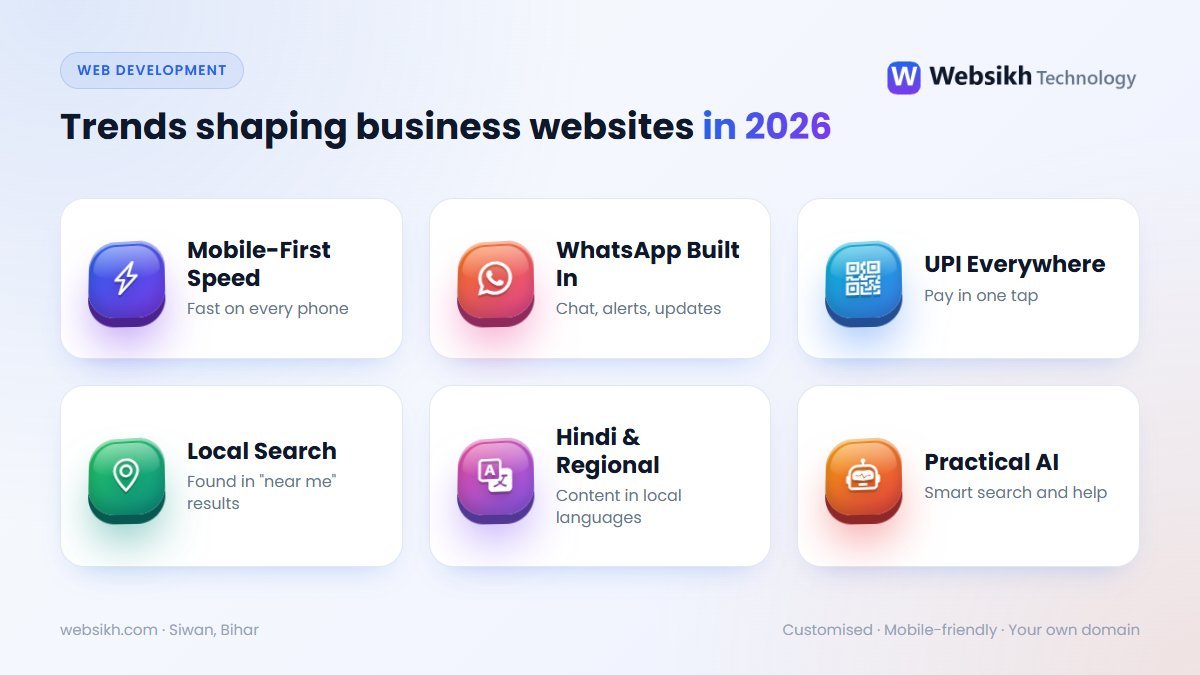
1. Mobile-first — and genuinely fast
Most Indian visitors browse on mid-range phones, often on mobile data. Designing for small screens first is now the minimum; the real difference is speed. Compressed images, clean code and good hosting decide whether a visitor stays or leaves in the first few seconds.
2. WhatsApp as the main contact channel
Customers would rather send a WhatsApp message than fill a long form or wait on a call. Websites now put a WhatsApp button everywhere it matters, and business systems send order, booking and report updates on WhatsApp automatically.
3. UPI and online payments by default
Paying by UPI is second nature for customers. Stores, booking systems and fee portals increasingly take payment at the moment of decision — through a payment gateway that supports UPI, cards and net banking — instead of "pay later at the counter".
4. Local search decides who gets the customer
"Near me" searches send customers to businesses that are easy to find on Google. A fast website with clear service pages, correct contact details and a well-maintained Google Business Profile is what gets you into those local results.
5. Hindi and regional-language content
A large share of new internet users prefer their own language. Adding Hindi or regional-language pages — even just for key services and contact information — makes a business feel closer and more trustworthy to local customers.
6. Practical AI, not hype
AI is most useful when it quietly makes things easier: smarter site search, quick answers to common questions, or help drafting descriptions. The goal is less friction for the customer, with a real person still available when needed.
7. Web apps replacing registers
Schools, clinics, shops and transport operators are moving daily work — admissions, appointments, billing, passes — from paper into web applications that run in a browser. Explore our ready software solutions to see what this looks like, or read ready-made vs custom software.
8. Security and data privacy
HTTPS, secure logins and protected admin areas are standard. With India's Digital Personal Data Protection Act in place, collecting only the data you need and keeping it secure is also a legal responsibility, not just good practice.
What this means for your business
| If your website… | Consider |
|---|---|
| Loads slowly on phones | Image compression, cleaner code and better hosting |
| Only has a contact form | WhatsApp and one-tap call buttons |
| Takes payments at the counter only | Online payment with UPI |
| Does not appear in local searches | Local SEO and a Google Business Profile |
| Runs your work on paper alongside it | A web application for bookings, billing or records |
Want your website to keep up? Get a free quote for an upgrade or a new build.
Frequently asked questions
Do I need to redesign my website every year?
No. A well-built website can last several years. It is usually enough to keep content fresh, improve speed and add features such as WhatsApp or online payments as your business needs them.
Is AI useful for a small business website?
In small, practical ways — better search, quick answers to common questions, or drafting content. It works best alongside clear information and a real person to follow up.
Should my website be in Hindi?
If many of your customers prefer Hindi, adding Hindi pages or a language switch can improve trust and enquiries. Key pages such as services and contact are a good place to start.
How can I check if my website is fast enough?
Open it on an ordinary phone using mobile data. If it takes more than a few seconds to show content, it needs work. Tools such as Google PageSpeed Insights give a detailed report.


